ServicesGutters
Gutter Replacement and Repair in Springfield, OH
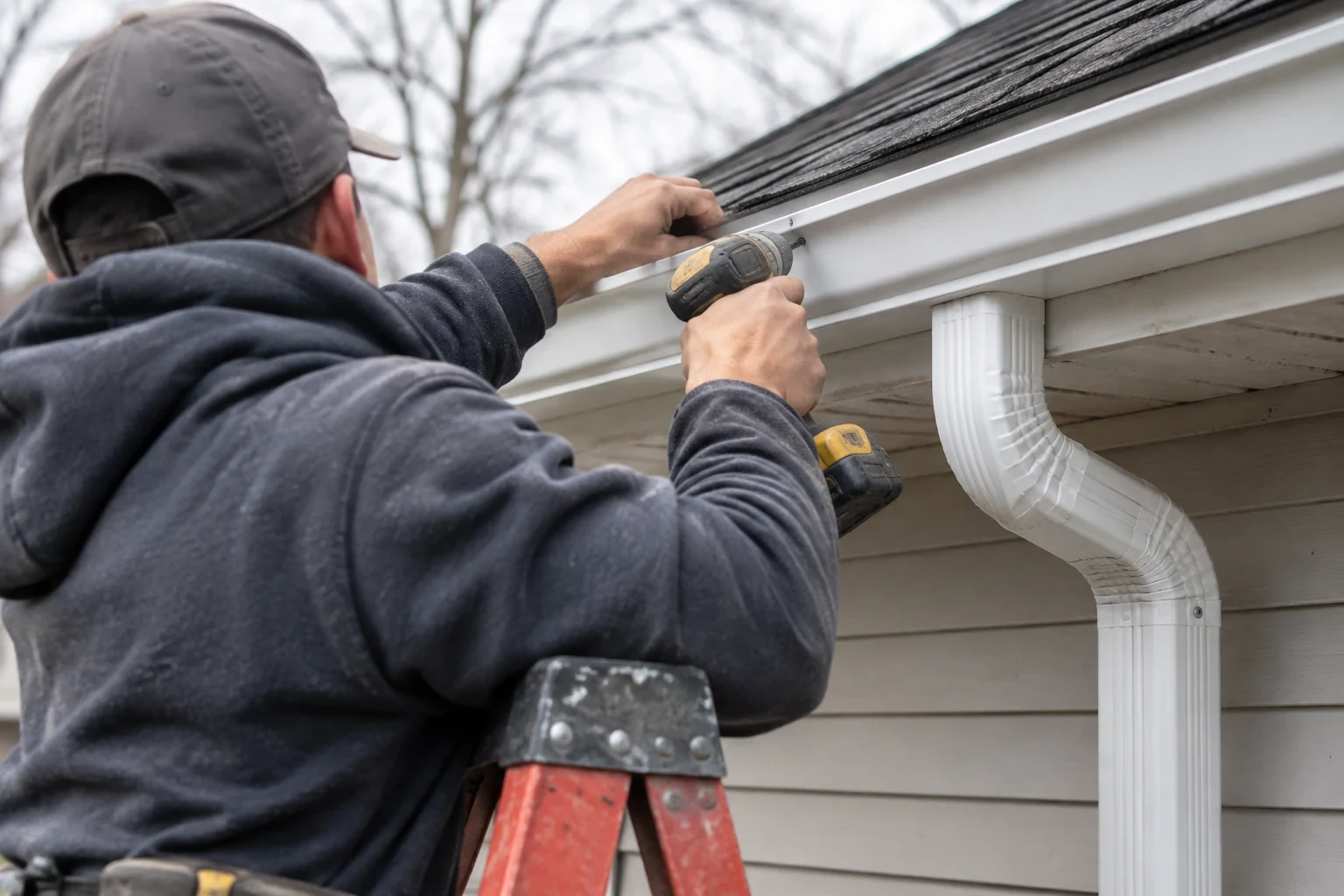
Gutters that sag, drip at the seams or spill over in a hard rain get swapped for continuous aluminum troughs rolled to length in your driveway. We screw each run into sound fascia, slope it toward a downspout matched to your roof and haul the old metal off that same day.
What a gutter system actually does for your home
A gutter's job is to move roof water away from three places: the fascia board, the soil against your foundation and the walkway below the eave. When a run sags, clogs or pulls away, water spills behind it, soaks the fascia and drops straight onto the ground next to your home. That is how rotted boards, wet basements and heaved steps start.
We install continuous aluminum gutters, rolled from a coil on a machine at your home so each run is one piece between corners. Fewer joints means fewer places for leaves to snag and sealant to fail. Springfield's freeze-thaw winters are hard on old sectional gutters, because water left standing in a joint expands overnight and opens the seam a little more each cycle.
Sometimes the right answer is not new gutters. If your runs are sound but pitched wrong or short a downspout, we will say so and quote the smaller fix.
Everything that goes into a new gutter system
Continuous runs rolled at your home
After measuring each eave, we feed aluminum coil through a forming machine parked in your driveway and cut K-style gutter to the exact length. Five-inch gutter suits most houses, while broad or steep roof planes often call for 6-inch so heavy spring storms do not overflow the corners.
Slope set toward every outlet
We drop each run about a quarter inch per ten feet as it travels to its downspout. Too flat and water pools in the trough; too steep and the line looks crooked from the curb and water can overshoot the outlet.
Screw-in hidden hangers
Concealed hangers fasten through the back of the gutter into the fascia, usually on two-foot spacing. Screws grip much better than old spikes and ferrules, which work loose as the wood swells and dries.
Downspouts matched to roof area
Downspout size and quantity follow the square footage draining to each run, and we step up to 3x4 inch where one big slope feeds a single corner. Extensions or splash blocks move the discharge away from your foundation.
Drip edge and fascia checked first
Nothing gets hung until we confirm the drip edge laps into the gutter and the board behind it is solid. Rotted fascia is replaced beforehand, a job explained on our soffit and fascia page.
Removal, hauling and a tidy yard
The old gutters, spikes and brackets come down onto tarps instead of into your beds. We load all scrap, sweep drives and walks, and pass a magnet across the grass before leaving.
Signs your gutters need attention
Water pouring over the front edge
If water sheets over the lip in a moderate rain, the gutter is clogged, undersized or pitched away from its outlet. Each cause has a different fix, so we check which one it is.
Runs pulling away from the fascia
A gap between gutter and board usually means failed spikes or rotted wood. Water then runs behind the gutter and down the face of the fascia.
Drips from seams and end caps
Sectional gutters rely on sealant at every joint, and that sealant cracks with age and cold. Rust streaks or drip lines below a seam show where it has let go.
Puddles or washouts along the foundation
Eroded mulch, a trench under the eave or a damp basement wall often traces back to a short downspout or a missing extension.
Peeling paint or soft spots on the fascia
Paint blistering just behind the gutter line means water is getting behind it. Catch it early and the board may only need sealing; wait and it needs replacing.
How a gutter job runs
- 1
Measure and look behind the gutters
We measure every eave, note where downspouts drain now and check the fascia and drip edge. You get a written, line-item estimate that lists gutter size, downspout count and any board repairs separately.
- 2
Protect the ground first
Tarps go down along each wall under the work, and ladders get standoffs so they do not rest on the new gutter or dent the eave.
- 3
Remove the old system
We take down old gutters in sections, pull spikes and brackets, and fix any fascia problems before the new runs go up.
- 4
Form, hang and test
Runs are rolled to length, fitted with end caps and mitered corners, hung on hidden hangers and pitched to the outlets. We run a hose through each section to confirm it drains and nothing drips.
- 5
Clean up and walk through
Scrap is hauled off, walks and drives are swept and the lawn is swept with a magnet. Then we walk the house with you and show where each downspout discharges.
What moves the price of gutters
Two things drive a gutter price: the amount of aluminum on the job and the labor needed to hang it safely at your eave height. We measure every run instead of guessing from the size of the house. Your written estimate lists each item below on its own line, so the total is easy to trace.
- Linear footage and corners
- Total eave length sets the base, and every inside or outside miter adds fitting and sealing time.
- Gutter and downspout size
- Moving from 5-inch to 6-inch gutter, or from 2x3 to 3x4 downspouts, uses more aluminum but often solves chronic overflow.
- Height and access
- Two-story eaves, steep yards and tight side setbacks need longer ladders or more setup time.
- Condition of the fascia
- Rotted boards have to be replaced before new gutters can hold a screw, and that work is priced as its own line.
Common gutter questions from Springfield homeowners
Something not covered here? (937) 806-4786
Why one-piece gutters instead of sections from a store?
Store-bought sections meet at a joint roughly every ten feet, and every one of those joints is held tight only by sealant that sun and frost wear down. A run rolled to length at your home has joints only at the corners and the outlets. Fewer seams means fewer spots where drips and debris dams begin.
Do I need 5-inch or 6-inch gutters?
The answer comes from the roof, not the house size. We look at the square footage feeding each eave and the pitch of that slope, since a steep, wide plane sends water down fast. When a big slope empties into a single corner, 5-inch gutter can spill over in a downpour. We settle the size while measuring and show you the reasoning.
If I'm getting a new roof, do the gutters have to go too?
Only if they are worn out. Gutters that are solid and draining properly can stay in place while we do a roof replacement, and we protect them during tear-off. If they are close to failing anyway, doing both together means the ladders, tarps and cleanup happen once instead of twice.
Will the work damage my landscaping?
Tarps cover the ground beneath each section we work on, and we set ladders outside planting beds wherever the layout allows. Old gutters are lowered down by hand, not tossed. Before we pack up, the lawn gets a magnet sweep for loose screws and spikes.
Can you fix just the part that leaks?
In many cases, yes. A leaking end cap, a loose outlet or a section that has lost its slope is usually a standalone repair. If the metal is corroded through or the fascia behind it has gone soft, we will show you photos of what we found and explain why patching would not last.
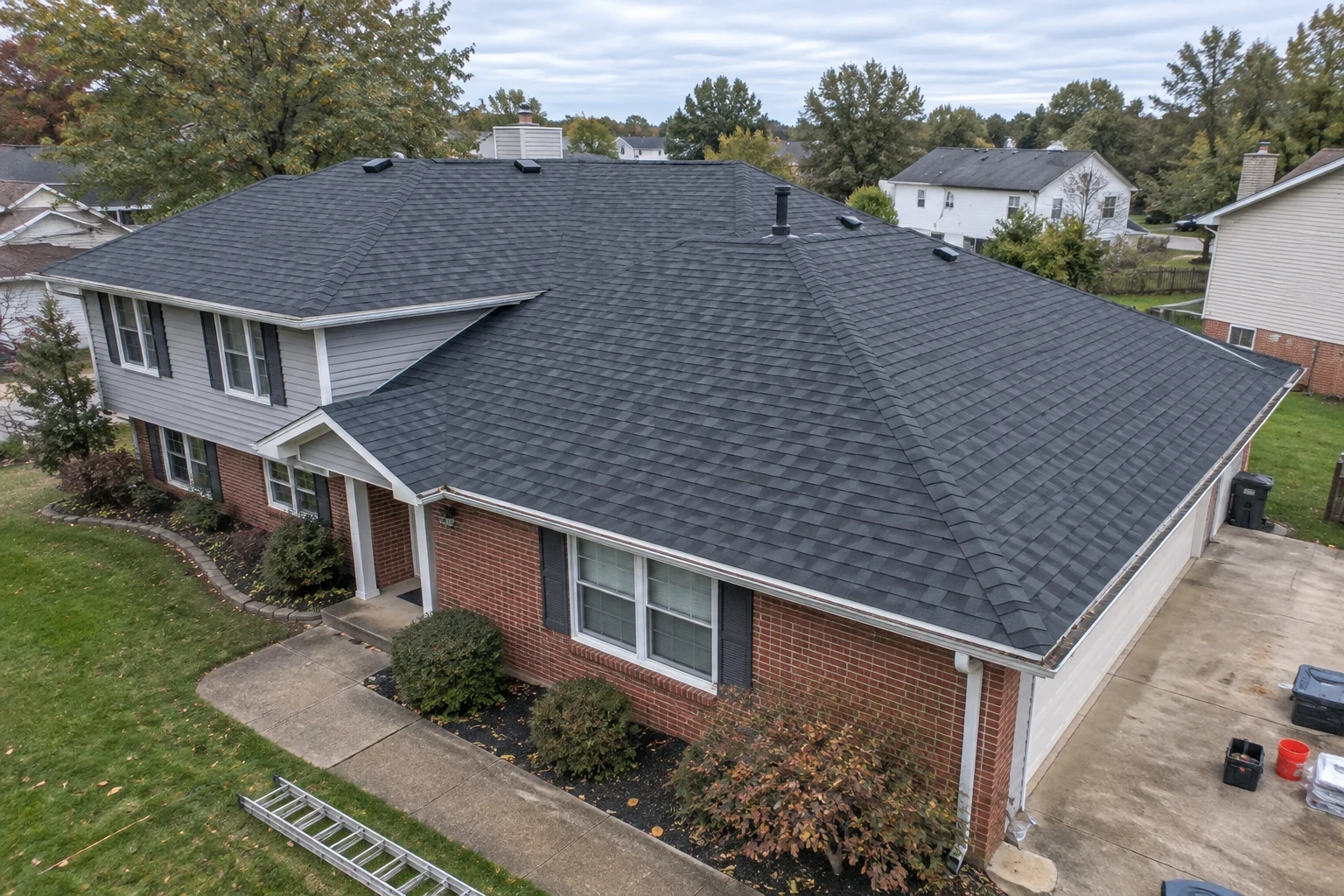
Ready for gutters that drain where they should
Tell us what you are seeing at the eaves and where the water ends up. We will set a time to measure and give you a written estimate with every line spelled out.