ServicesRoof Inspections
Roof Inspections in Springfield
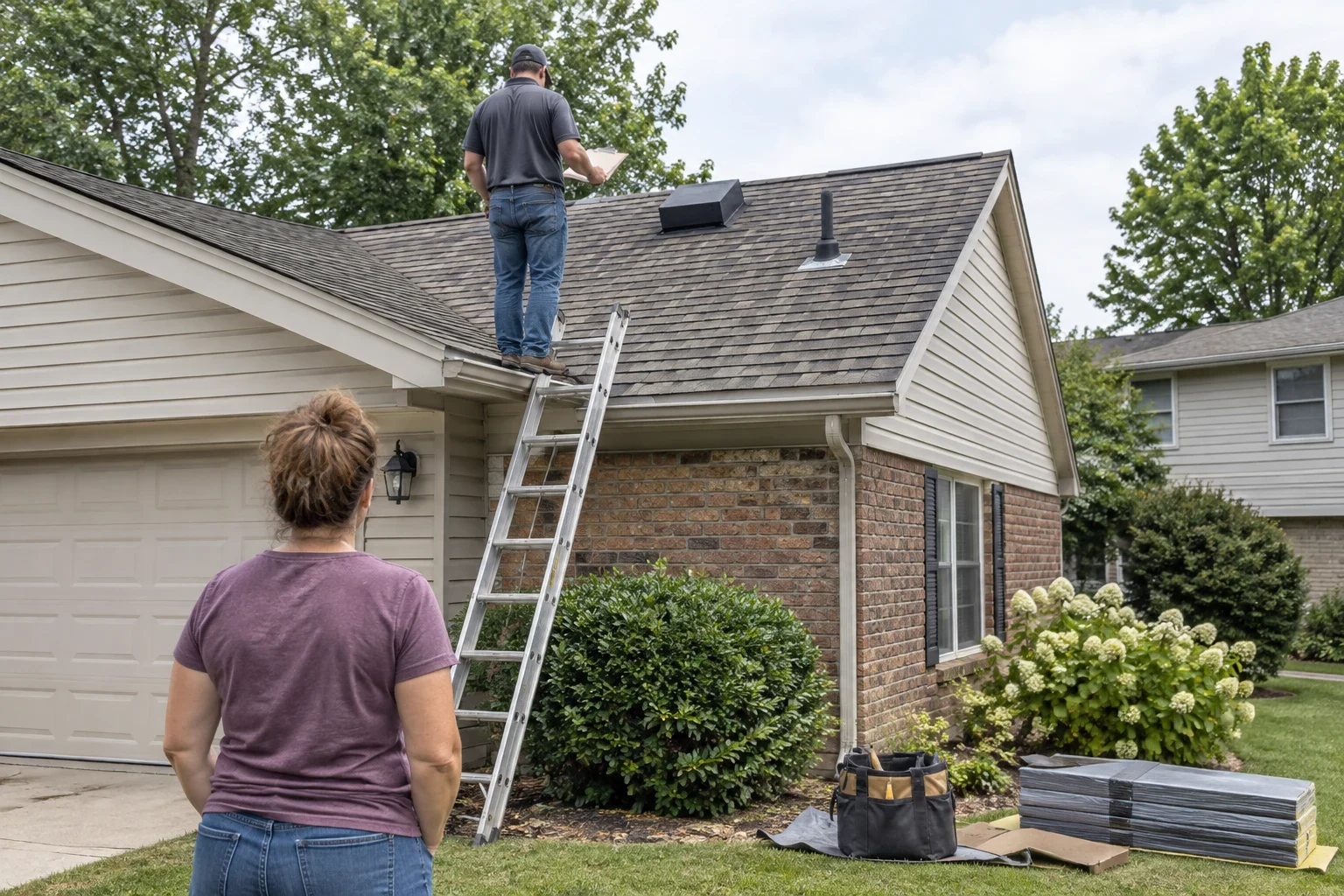
We walk the roof, check the flashing and penetrations, and look at the attic from the inside. You get photos of what we found and a plain answer: leave it alone, repair it or plan a replacement. Nothing gets disturbed but a few footprints.
Why a roof inspection is worth the hour
Leaks rarely begin where you can see them. A shingle tab whose sealant strip has released, a cracked neoprene collar around a plumbing stack, or a gap in the step flashing where a roof plane meets a sidewall can let water soak into the decking for months before a ceiling ever shows a stain. Catching those spots early keeps the fix small and the bill modest.
We treat the roof as connected parts rather than a field of shingles. That means the shingles themselves, the flashing and sealants, the ventilation that keeps the attic dry, and the gutters and fascia that move water off the edge. Ohio winters run each of those parts through freeze-thaw cycle after freeze-thaw cycle, so we judge how well each one is holding up, not only whether it drips today.
Book one before you buy or sell a house, after a rough winter, once a roof is past 15 years, or whenever you notice something on or under the roof you cannot account for.
What we check on every inspection
- Shingle surface and seal
- We look for granule loss, cracking, curling and tabs that have lost their adhesive seal. Bare asphalt ages fast under UV, and unsealed tabs lift in wind.
- Flashing and penetrations
- Chimney counterflashing, step flashing at walls, valley metal and the boots around vent pipes. These joints cause more leaks than open shingle fields do.
- Decking and soft spots
- We walk the roof deliberately and note any area that flexes underfoot, which usually means wet or delaminated plywood or OSB below.
- Attic and ventilation
- From inside we look for daylight, water staining, damp insulation and frost on nail tips. We also confirm that soffit intake and ridge exhaust are both moving air. When that balance is off, trapped summer heat bakes the shingles from underneath, and in winter the warm attic thaws snow that refreezes as ice dams at the eaves.
- Edges, gutters and fascia
- Drip edge, gutter pitch, downspout discharge and the condition of fascia boards. Rot at the roof edge often traces back to overflowing gutters.
When your roof needs a closer look
Grit collecting at downspouts
Sand-like granules piling up in gutter troughs or washing out at downspout outlets mean the shingles are losing the coating that shields the asphalt from sun.
Water marks inside
Brown rings on a ceiling or dark streaks on attic rafters signal a slow leak. The actual entry point is often a few feet upslope from where the stain appears.
Heavy ice along the eaves
Thick icicles and ridges of ice at the gutter line tell us attic heat is melting snow higher on the roof. That meltwater runs down, refreezes over the cold overhang and can push back under the shingles.
Loose or missing tabs
A handful of lifted or missing shingles is enough to leave nails and underlayment open to rain and UV.
A home sale on the calendar
A roof report gives buyer and seller solid facts about remaining service life and any repairs to settle before closing.
What affects the cost of an inspection
An inspection is priced on how much roof there is to cover and how hard it is to reach safely. We tell you the cost on the phone before we schedule, so there are no surprises on the day.
Roof size and layout
More squares, dormers, valleys and penetrations mean more joints to check and photograph.
Pitch and height
A steep or two-story roof needs harnesses and roof anchors, which adds setup time.
Attic access
A walk-in attic goes quickly. A tight scuttle opening inside a closet, or an attic with no opening at all, means we plan another way to see the underside of the deck.
Written report needs
A detailed report for a home sale or a lender takes more time to prepare than a verbal walkthrough with photos.
How the inspection goes
- 1
Schedule over the phone
On the call we want to know roughly how old the roof is, whether you have seen drips or stains, and where the attic opening is. That way the right ladder and safety gear come with us the first time.
- 2
Protect the property first
Ladders go on stabilizer pads with feet set on boards, not straight onto beds or lawn. Inside, we lay a drop cloth under the attic hatch before opening it.
- 3
Roof and attic check
We work top to bottom, photographing each issue with a wide shot for location and a close shot for detail. Most inspections take an hour or two depending on size and pitch.
- 4
Walkthrough and cleanup
Before we leave, we pick up any debris we knocked loose, close the hatch and vacuum insulation dust. Then we go through the photos with you and explain what each finding means and what it would take to fix.
Questions about our roof inspections
Are you going to push me toward a new roof?
No. When a roof still has good years in it, we tell you that and show you the photos that back it up. If a targeted fix will solve the issue, we recommend roof repair instead of roof replacement. You can weigh every finding yourself from the pictures.
Do I need to be home while you inspect?
It helps to have you there to open the attic and ask questions during the final review. If that does not fit your day, we can handle the exterior on our own and go over the photos with you by phone later.
Can walking on the roof damage my shingles?
We wear soft-soled shoes, place our feet on the lower part of the tabs and stay off brittle shingles in cold weather, when they crack more easily. On steep or fragile roofs we inspect from the ladder and along the eaves instead of walking the surface.
How frequently does my roof need a checkup?
For most asphalt roofs, a look every one to two years is sensible. After about 15 years, plan on an annual visit. A spring check following a hard winter is also smart, since freeze-thaw damage usually shows itself once the snow melts.
What if the inspection turns up a problem?
We explain what caused it and how it gets fixed, and if you want us to do the work, you get a written estimate. Small items such as a cracked vent boot or a loose ridge cap can often be taken care of on a short return trip.
Find out what your roof needs
We check it top to bottom, photograph every finding and leave your yard and attic the way we found them. Phone us to set a time that works for you.